Imagine every child effortlessly reaching their full potential.
Healthy growth and happiness for autistic children or children with ADHD, ADD and Sensory Impairment through Qigong Massage Therapy.
Our Make Children Better® school provides research-based educational programs for parents and professionals in Europe and Africa.
Transforming lives through healing with Qigong Therapy.
Research-Proven Autism Treatment for Children that Works.
Qigong Sensory Treatment (QST) or Qigong Therapy is a body-oriented therapeutic model that helps sensory impairment and self-regulatory problems in autistic children. It is developed by Dr. Louisa Silva M.D., M.P.H. and is the result of 16 years of scientific research with more than 22 years of successful clinical application.
TOUCH-MEDICINE: Read "The story of a Touch-Based
Treatment for Autism" in this free E-book
Autism Treatment for Children.
Tools and Training to Treat Autism
This Qigong therapeutic massage is a proven, paediatric touch-based autism treatment that parents perform for 15 minutes per day for up to 2 years to normalise sensory issues. Normalising the child's touch-sense reduces symptoms of autism. Results are apparent after as few as 30 days of treatment. Qigong massage for autism is unique among autism treatments because it grants children access to normal development, helps them feel comfortable and connected to others, and improves lifetime outcomes.
How Qigong Massage for Autism Works
Research shows that autistic children have early loss of child-to-parent bonding, as well as loss of the ability to feel pleasure and reassurance with parent touch. Instead they near-universally reject, avoid, or fail to notice touch. Without the ability to enjoy touch and close physical contact, children aren't socially receptive and can't be soothed by parent touch. Before long, social delay and abnormal behavior are evident.
Research shows that pleasure and bonding with gentle touch are mediated by tiny sensory nerves in the skin, and when these nerves are damaged, children lose pleasure and bonding with touch. Fortunately, the damage is reversible, and treatment with Qigong massage returns the sense of touch to normal. This improves bonding, stimulates social development and eliminates autistic behaviour.
Qigong Sensory Massage at Home
Simple daily 15 min massage for great results.
Qigong Massage
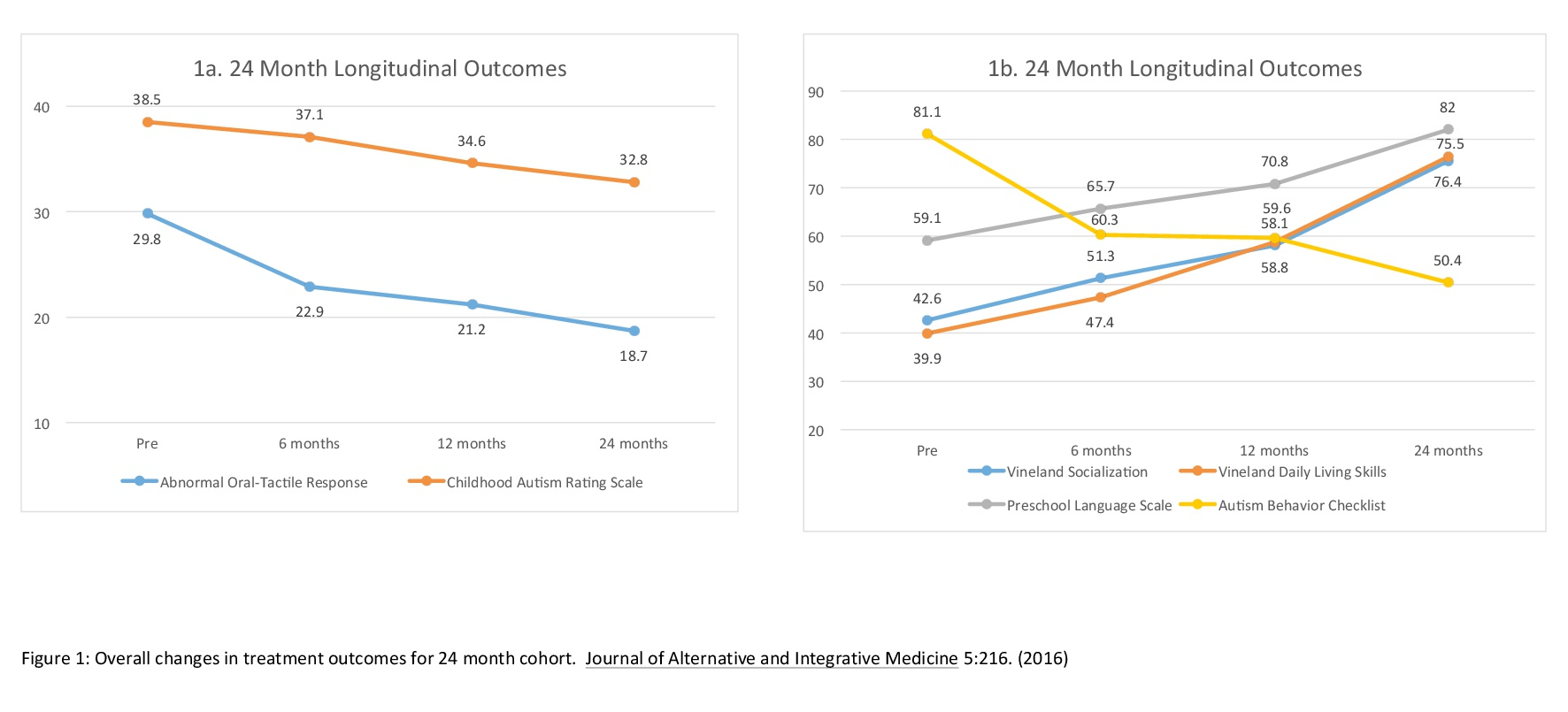
Dr. Louisa Silva is the lead researcher for qigong massage and founder of QSTI. She hypothesised that "if autism develops because of loss of touch, then restoring touch with Qigong massage should reduce autism." In 17 studies on young autistic children, she showed that treatment with Qigong massage decreased the severity of all aspects of autism.
After five months of treatment:
Sensory problems improved by 38%; touch improved by 49%
Autistic behavior decreased by 32%;
Social skills increased and children were more affectionate
Receptive language increased
Parenting stress decreased by 44%
After two years of treatment:
There was 100% recovery of the sense of touch
The average decrease of autism severity was 44%
Over 50% of high-functioning children moved off the spectrum
A study evaluating treatment in older children (aged 6-11) showed similar results.
Qigong Massage Treatment for Autism is a Breakthrough
The Qigong massage program is based on practices used in the East for thousands of years, and has successfully treated more than a thousand children in the United States since 2003. It is a breakthrough treatment for autism in three ways::
It is the first treatment to improve all aspects of autism – sensory, behavioural, social, and language.
It is the first treatment to be consistently effective for all autistic children wether they have language or not.
It is the first treatment that effectively treats the sensory abnormalities in autism.
"as a therapist or coach, have a lasting impact on autism without heavy or lengthy counselling."
Do you sense there is so much more of potential in your young little clients?
Do you notice that children do not know how to take their learned skills into their home and school situations optimally?
Do you sometimes wonder whether parents should be supervised as well?
Do you sometimes worry that children remain dependent on your guidance?
Do you yearn to have a more sustainable impact on autism?
In short: You have some doubt and feel responsible. You are concerned that you might be missing some cues.
You are not alone!
What if I tell you that things can be done differently? With more ease, more flow and more satisfaction. But also with a permanent impact on autism.
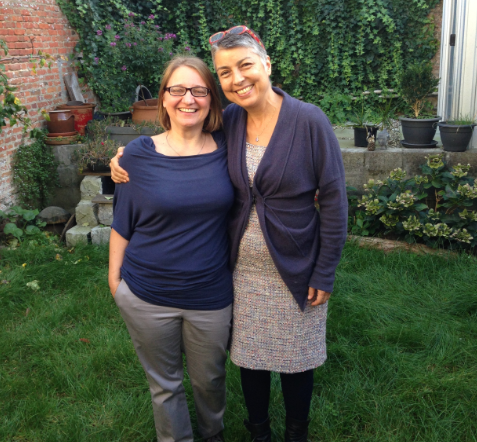
Sabine and Dr. Silva

Created with © systeme.io